

Critical safety equipment in biogas plants
Biogas plants combine flammable gases, H2S and low-pressure processes. The essential safety equipment per ATEX and EN 1825 for reliable operation.


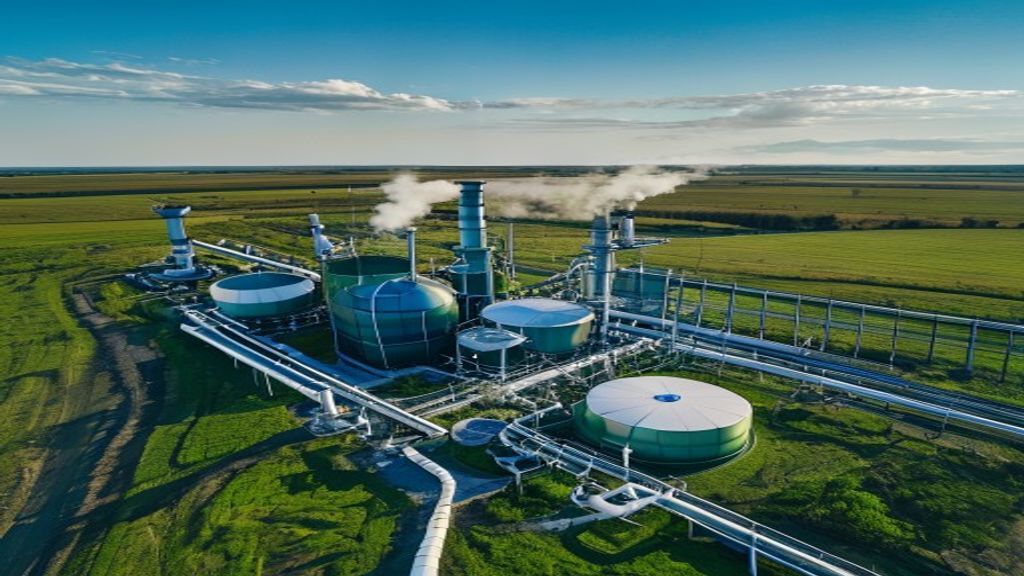
A biogas plant works with a mixture of methane (50-65%), carbon dioxide and traces of hydrogen sulfide, under very low pressure conditions and with large volumes of stored gas. That combination —flammable gas, permanent explosive atmosphere, low-pressure equipment— makes safety more demanding, not less, than in a conventional petrochemical plant.
Specific risks of biogas
- Permanent explosive atmosphere at the digester head (zone 0/zone 1 according to ATEX).
- Operating pressure of just a few mbar: any vent obstruction can collapse the digester membrane.
- H2S corrosion in the presence of moisture —especially aggressive on carbon steel and brass—.
- Possibility of flame flashback from the flare or the cogeneration engine.
- Foam formation and line clogging in poorly fed digesters.
Critical equipment
Detonation flame arresters + endurance burning
Every connection between the digester and any equipment with a potential ignition source (CHP engine, flare, boiler) requires a detonation-type flame arrester with an endurance burning certificate. The German TRBS 3146/TRBS 3151 standard —the de facto reference in Europe— is explicit on this point.
Pressure-vacuum safety valves for biogas
PV valves for biogas are specific: they must be tight against H2S, use corrosion-resistant materials (AISI 316L as a minimum) and operate at set points of just a few mbar. A standard petrochemical PV valve is not suitable.
Emergency flare
Essential for handling production surpluses when the engine is shut down. It must be sized for the digester's maximum flow rate and feature an automatic pilot and flame monitoring.
Desulfurization system
Reducing H2S from levels of 1,000-3,000 ppm down to <100 ppm dramatically extends the life of the cogeneration engine and lowers corrosion across the entire system.
Foam retention system
An organic overload can generate foam that carries liquid into the gas line. Cyclonic separators and foam breakers prevent damage to compressors and flares.
Regulatory compliance
- ATEX Directive 2014/34/EU for all equipment in classified zones.
- EN 1825-1 / EN 16726 for grid-injection gas quality.
- EN 16723-1 for biomethane injection into transport grids.
- Regulation (EU) 2016/426 for appliances burning gaseous fuels.
Biogas plants that combine mechanical safety with digital monitoring reduce their incident rate by more than 70% compared to plants with minimal passive protection.
Conclusion
The safety of a biogas plant is not solved by adding more equipment, but by using the right equipment, certified specifically for biogas. Tecnovent offers integrated solutions: flame arresters, PV valves, flares and inerting systems designed for the real-world conditions of biogas.
Frequently asked questions
Why does a biogas plant need dedicated equipment rather than petrochemical hardware?
Because it combines flammable gas, a permanent explosive atmosphere and operating pressures of just a few millibars, plus corrosive H2S. A standard petrochemical PV valve is neither tight against H2S nor able to work at those set points; AISI 316L is the minimum material.
Which flame arrester is required between the digester and the CHP engine?
A detonation-type flame arrester certified for endurance burning, on every connection to a potential ignition source: CHP engine, flare or boiler. The German TRBS 3146/3151 are the de facto European reference here.
How far does H2S need to be reduced?
Bringing it down from 1,000-3,000 ppm to below 100 ppm markedly extends the life of the cogeneration engine and cuts corrosion across the whole installation.
Which regulations apply to a biogas plant?
ATEX 2014/34/EU for equipment in classified zones, EN 16723-1 for biomethane injected into transmission grids, and Regulation (EU) 2016/426 for appliances burning gaseous fuels.