

Nitrogen blanketing: when and why to inert a process tank
Nitrogen blanketing keeps an inert atmosphere above the stored product, eliminating explosion and degradation risk. When it is essential and how to size it.


Inerting—or blanketing—involves replacing the oxygen in the vapour space of a tank with an inert gas, normally nitrogen, in order to keep the O₂ concentration below the Limiting Oxygen Concentration (LOC) of the mixture. Below that threshold, combustion is impossible, regardless of the concentration of flammable vapour.
When inerting is required
- Products with a low flash point (solvents, monomers, pharmaceutical intermediates).
- Oxidation-sensitive products (edible oils, fine chemicals).
- Processes with mixing or agitation stages that may generate static electricity.
- Storage of hygroscopic liquids that degrade with the humidity in the air.
How a blanketing system works
A typical system consists of two complementary control loops:
Nitrogen supply (make-up)
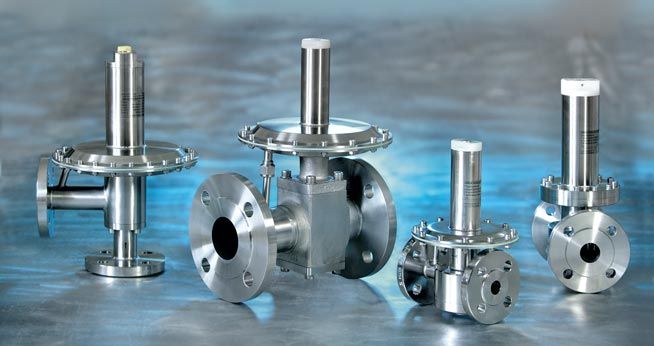
A pressure-regulating valve injects nitrogen when the internal pressure drops—due to emptying or cooling—down to the make-up set point (typically +2 to +4 mbar). It always maintains a slight overpressure that prevents air from entering.
Relief (venting)
When the pressure rises—due to filling, solar heating or excessive supply—a relief valve or back-pressure regulator lets the excess escape to the atmosphere or to a vapour collection header. The vent set point is usually 4-8 mbar above the make-up set point in order to avoid short cycles.
Measurable benefits
- Elimination of the risk of internal explosion due to air ingress.
- Reduction of evaporation losses (especially with volatile products).
- Longer product shelf life: less oxidation, less polymerisation, less colour change.
- Less internal corrosion of the tank and heating coils.
- Easier compliance with ATEX and NFPA 69.
Common design mistakes
Inerting almost always fails due to poor sizing, not poor technology:
- Set points too close together: the make-up and relief valves fight each other continuously and consume nitrogen unnecessarily.
- Insufficient make-up flow for the worst-case scenario of fast emptying or night-time cooling.
- Inadequate nitrogen purity: 95% PSA nitrogen may not be enough if the product's LOC is 8%.
- No continuous oxygen measurement: without an O₂-based control loop, only pressure is controlled.
A well-designed blanketing system consumes up to 60% less nitrogen than a poorly regulated one, with the same or better safety.
Conclusion
Nitrogen inerting is the most effective safety barrier against the risk of internal explosion in tanks. When properly designed, it is also cost-effective thanks to reduced losses and extended product life. Tecnovent supplies complete blanketing packages: make-up regulator, relief valve, control panel and O₂ measurement.
Frequently asked questions
What is nitrogen blanketing?
Replacing the oxygen in a tank's vapour space with nitrogen until the O2 concentration sits below the Limiting Oxygen Concentration of the mixture. Below that threshold combustion is impossible, whatever the flammable vapour concentration.
How are the make-up and relief set points chosen?
Nitrogen make-up typically opens between +2 and +4 mbar, and the vent is set 4-8 mbar above it. If the two values are too close, the valves fight each other continuously and nitrogen consumption climbs.
Is 95 % nitrogen from a PSA generator good enough?
It depends on the product's Limiting Oxygen Concentration. If the LOC is 8 %, 95 % nitrogen may not be enough; the purity has to be checked against the real LOC before choosing the supply.
How much nitrogen does a well-regulated system save?
A properly designed blanketing system uses up to 60 % less nitrogen than a poorly regulated one, with the same safety level or better.